
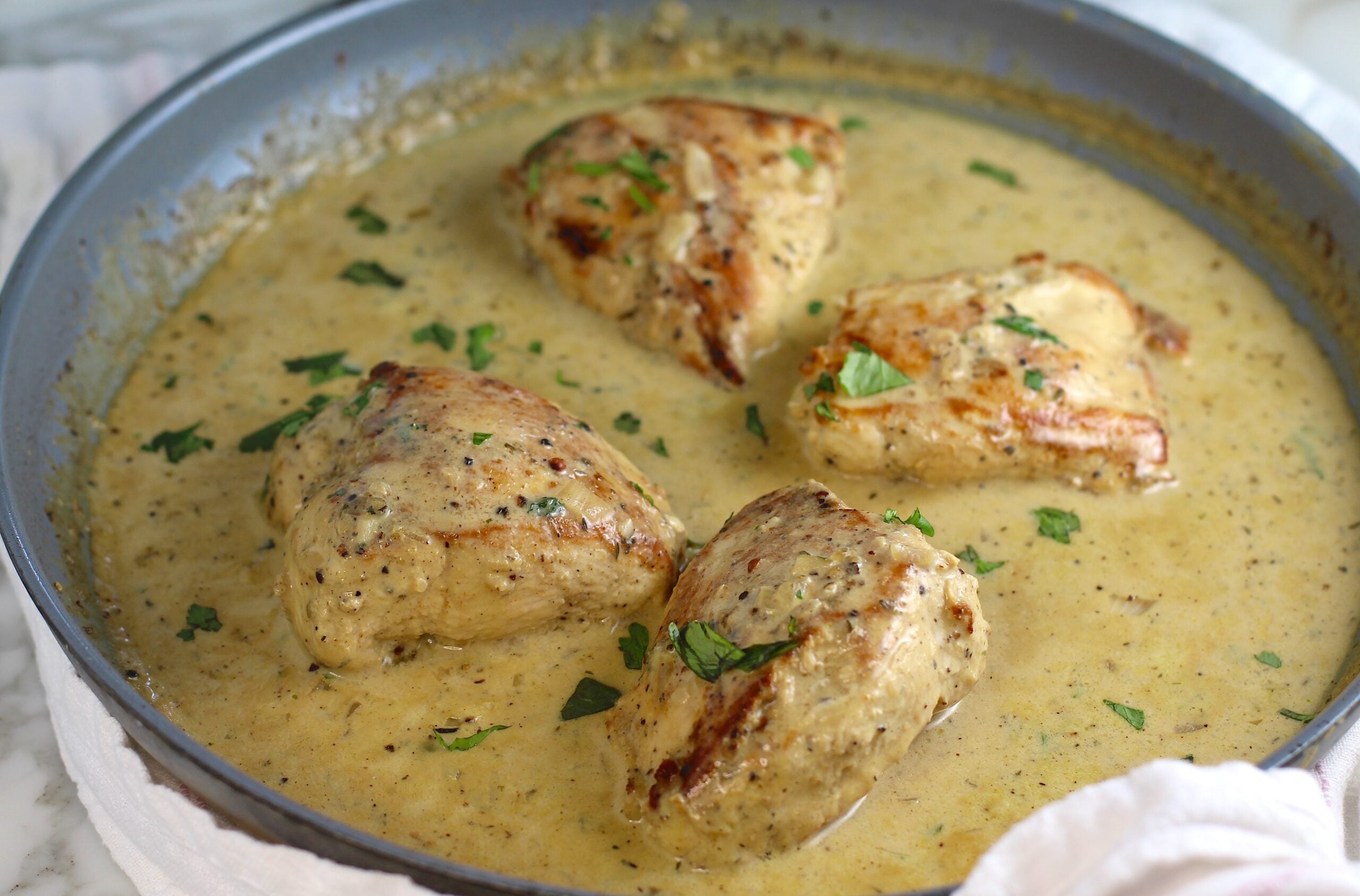
Chicken Au Poivre is a French-inspired skillet dinner with tender chicken breasts and a creamy Dijon peppercorn sauce, ready in about 30 minutes.
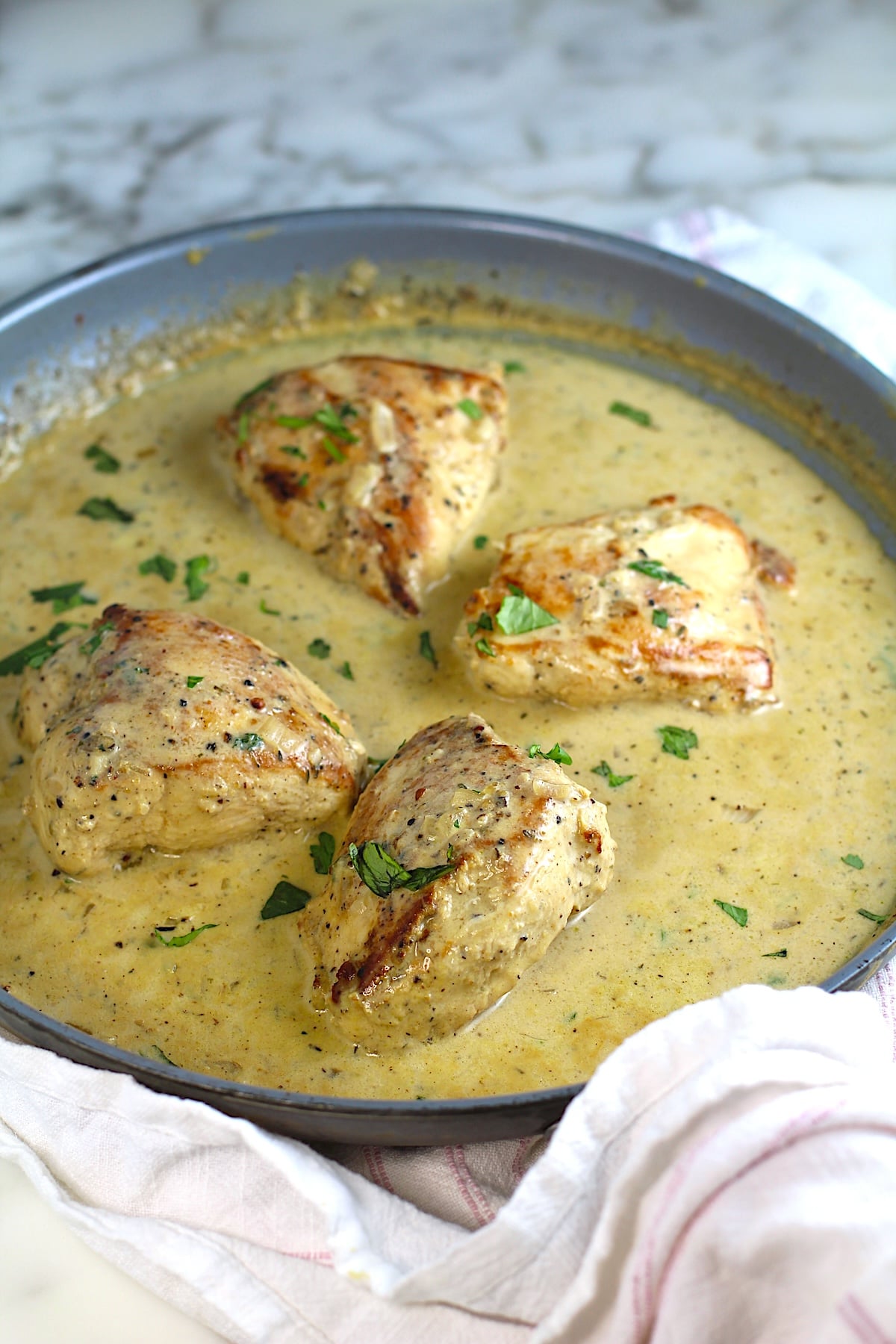
Chicken Au Poivre sounds fancy, but you can absolutely make it at home. Au poivre is traditionally served with filet mignon or other cuts of steak, but the same creamy, peppery sauce works beautifully with chicken. It’s an easy way to take everyday chicken breasts and turn them into something that feels a little more special.
Tender chicken breasts are coated with Dijon mustard and freshly cracked black pepper, seared in a skillet, and then finished in a creamy sauce made with shallots, garlic, Dijon, chicken broth, and even more black pepper. The result is rich, savory, peppery, and completely delicious.
And while the name sounds fancy, the actual dinner is surprisingly simple. Everything happens in one skillet, and the sauce comes together right in the same pan with all those flavorful browned bits from the chicken. Serve it over mashed or roasted potatoes, rice, pasta, or your favorite grain, and you’ve got a dinner that feels a little special without requiring a special occasion. Basically, restaurant vibes without the restaurant bill—or the need to put on real pants.
Jump to:
Why You’ll Love Chicken Au Poivre
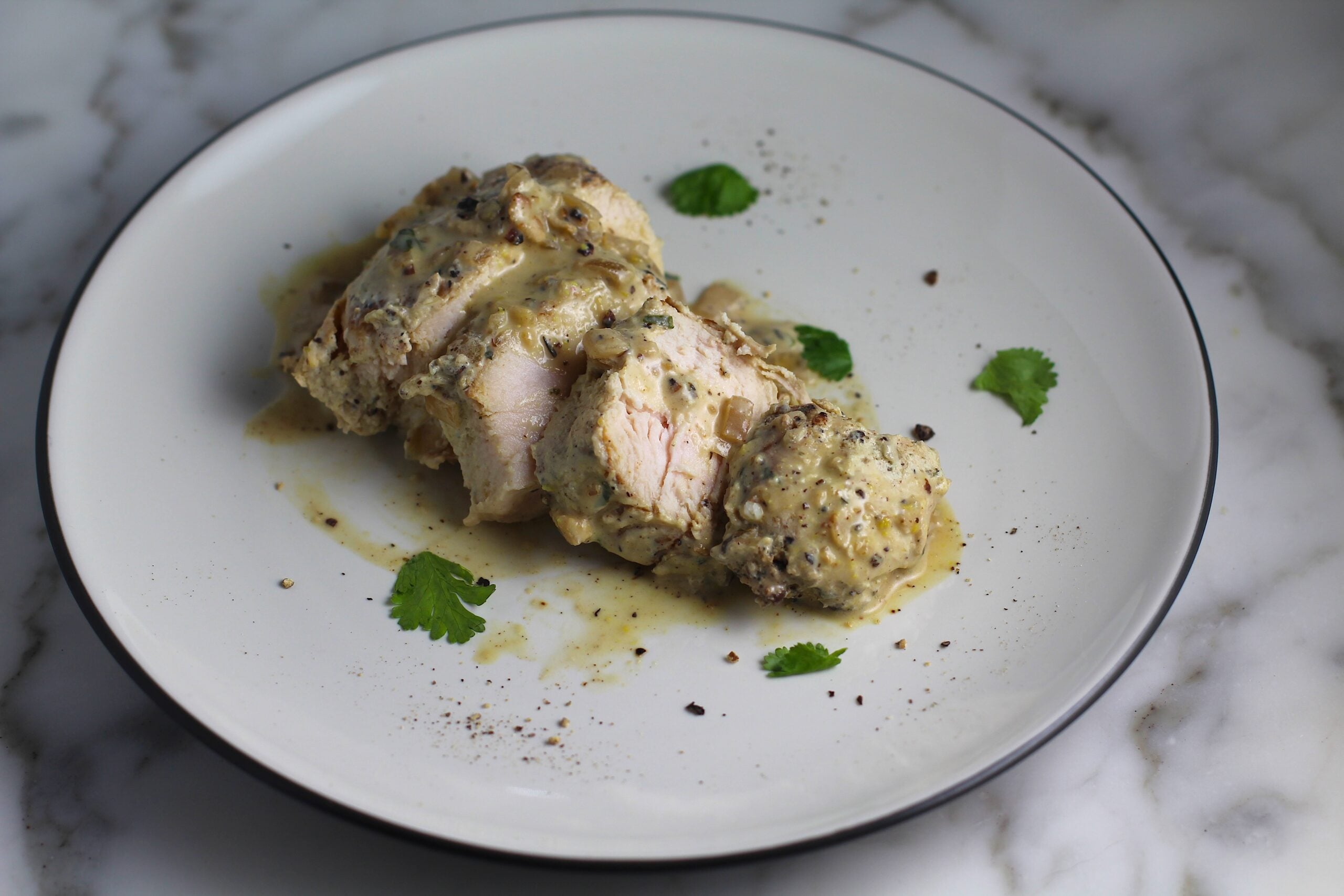
f you want a dinner that feels a little fancy but doesn’t ask you to spend your entire evening in the kitchen, this one checks all the boxes.
- It’s an easy way to dress up chicken breasts. No boring chicken dinner here!
- It tastes restaurant-worthy. The creamy Dijon and black pepper sauce makes simple chicken breasts feel like something special.
- Everything happens in one skillet. The chicken, sauce, and all those delicious browned bits come together in the same pan.
- It’s ready in about 30 minutes. Perfect when you want a homemade dinner without a long ingredient list or complicated cooking.
- The sauce is the star. Creamy, savory, peppery, and packed with flavor from Dijon, shallots, garlic, and fresh herbs.
- It’s easy to prep ahead. Season the chicken and chop the aromatics over the weekend, and you’ll have less to do on a busy night.
- You can serve it with just about anything. Potatoes, pasta, rice, quinoa, or your favorite grain all work beautifully.
Simple Ingredients and Substitutes
Quick note! This post contains affiliate links, which means I earn a commission (at no extra cost to you) if you purchase from them. This commission is what helps me keep this blog afloat :). I also share these links because I have used the products, genuinely love them, and want you to know exactly what I used.
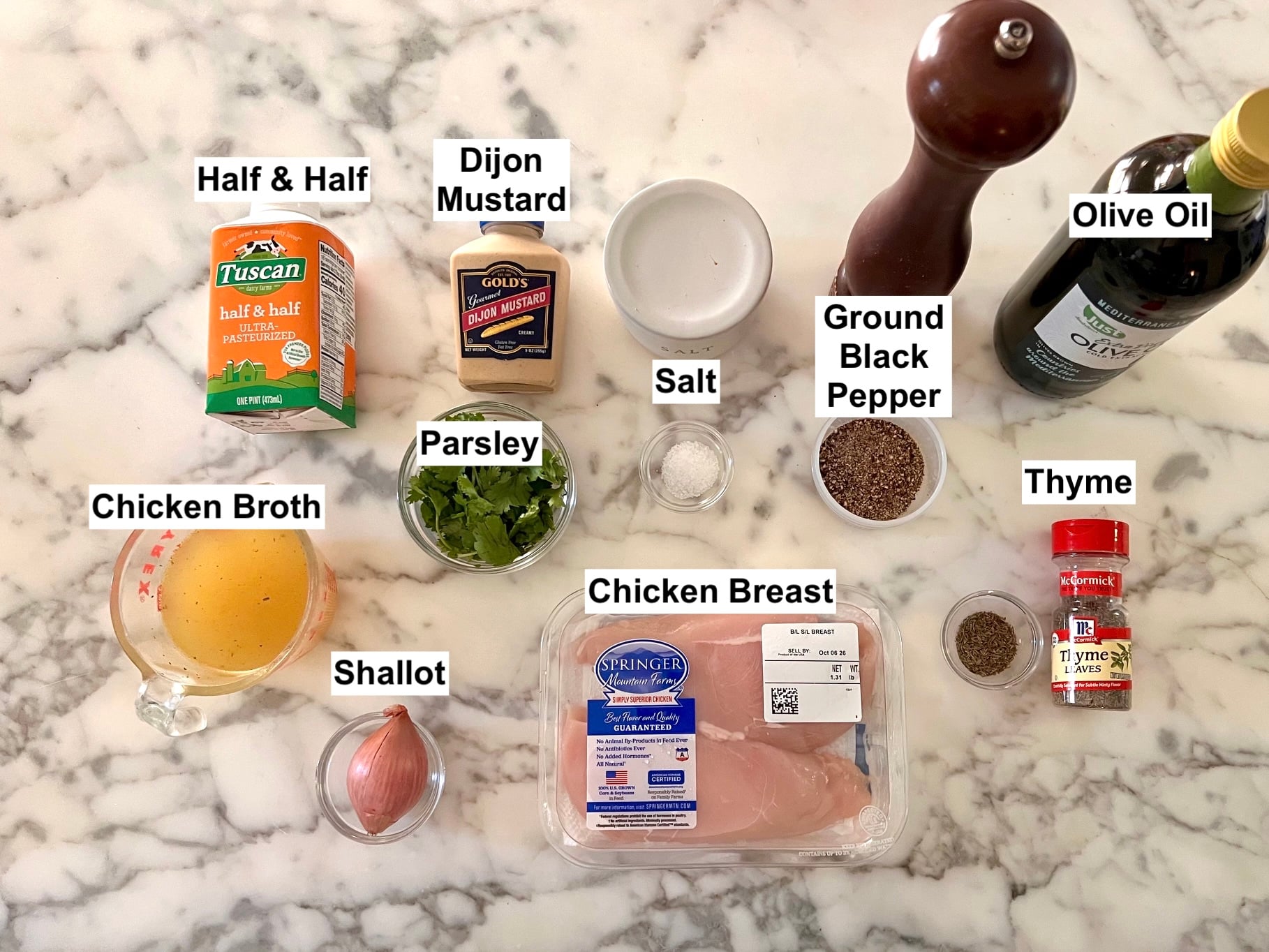
- Chicken Breasts, boneless skinless – I like lean, boneless, skinless chicken breasts for this recipe, as they are quick cooking and hold up nicely to the rich sauce. If you have the skin on, start searing first with skin-side down. If you have bone-in, you will need to double the cooking time after you flip the chicken and cook with the lid on. Use a thermometer to ensure it cooks to a 165F internal temp. Boneless Chicken thighs will have the same cooking time. Check out all of my tips on Prepping and Storing Chicken for Easier Dinners.
- Dijon Mustard – The dijon mustard is used twice. First it coats the raw chicken for flavor and so that the seasonings stick to the chicken. Then it is added again to the sauce for tang and depth of flavor. Since we are not adding wine, you will need something with acidity and the dijon is perfect.
- Fresh Ground/Cracked black pepper – Since the black pepper is the star in this recipe, you want to make sure it is freshly cracked or ground. You can grind it as fine as you want. If you leave larger pieces of cracked pepper, these will deliver a spicy bite throughout the dish. If you grinder it finer, it will have a warm flavor and slight spice, but not too assertive. I did a mix of some fine ground and some cracked.
- Extra virgin olive oil – The oil is used for cooking the chicken and the shallots with garlic. You can substitute with avocado or vegetable oil.
- Shallot – I used shallot for the sweet, mild flavor. You can substitute with yellow onion, white onion, red onion, or even scallions.
- Fresh Garlic cloves, minced – Fresh is best in this simple recipe, but you can buy the pre-minced garlic sold in a small jar or use dried garlic flakes or garlic powder.
- Chicken Broth or stock – You can also use vegetable broth or stock or Beef broth or stock. You can also use water mixed with a beef or chicken bouillon cube or beef base or chicken base.
- Half and Half – Typically, heavy cream is used, so you can use that. I wanted to make this a bit lighter, so I went with half and half, which still has a rich, creamy texture and balances the pepper. You can substitute coconut milk or cream (no added sugar).
- Fresh Italian Parsley, chopped – Fresh parsley is best, don’t even bother with dried parsley. You can substitute in other fresh herbs, such as basil or oregano.
- Thyme, dried or fresh – Thyme adds a nice herby and earthy flavor. You can substitute with oregano, rosemary, or margarom.
- Italian Parsley chopped – This is added to the sauce for some freshness and at the end as garnish for color. It is optional. You could substitute with fresh basil.
See recipe card for quantities.
Simple Equipment
You don’t need much special equipment to make this Chicken Au Poivre—just a few good kitchen basics!
- Measuring Spoons: You’ll use these for the Dijon mustard, olive oil, pepper, thyme, and other seasonings. A good set of measuring spoons is one of those inexpensive kitchen basics you’ll use constantly.
- Chef’s Knife & Cutting Board: You’ll need a sharp knife and sturdy cutting board for finely dicing the shallot, mincing the garlic, and chopping the parsley.
- Garlic Press or Microplane: You can mince or grate the fresh garlic using a Garlic Press, grater, or Microplane.
- Large Skillet with Lid: A large skillet is essential for searing the chicken and then making the creamy Dijon pepper sauce right in the same pan. I use my absolute favorite 12″ Ceramic Pan with a fitted lid. Food really does slide right off with minimal oil, and I don’t have to worry about food sticking and burning.
- Instant-Read Meat Thermometer: This is one kitchen tool I really recommend having on hand for chicken. It takes the guesswork out of knowing when your chicken has reached the safe internal temperature of 165°F.
Time Saving Prep-Ahead Steps
We are all extremely busy and making dinner during the week can be overwhelming. Here are steps you can prepare ahead to save time on busy nights! (See the full recipe below)
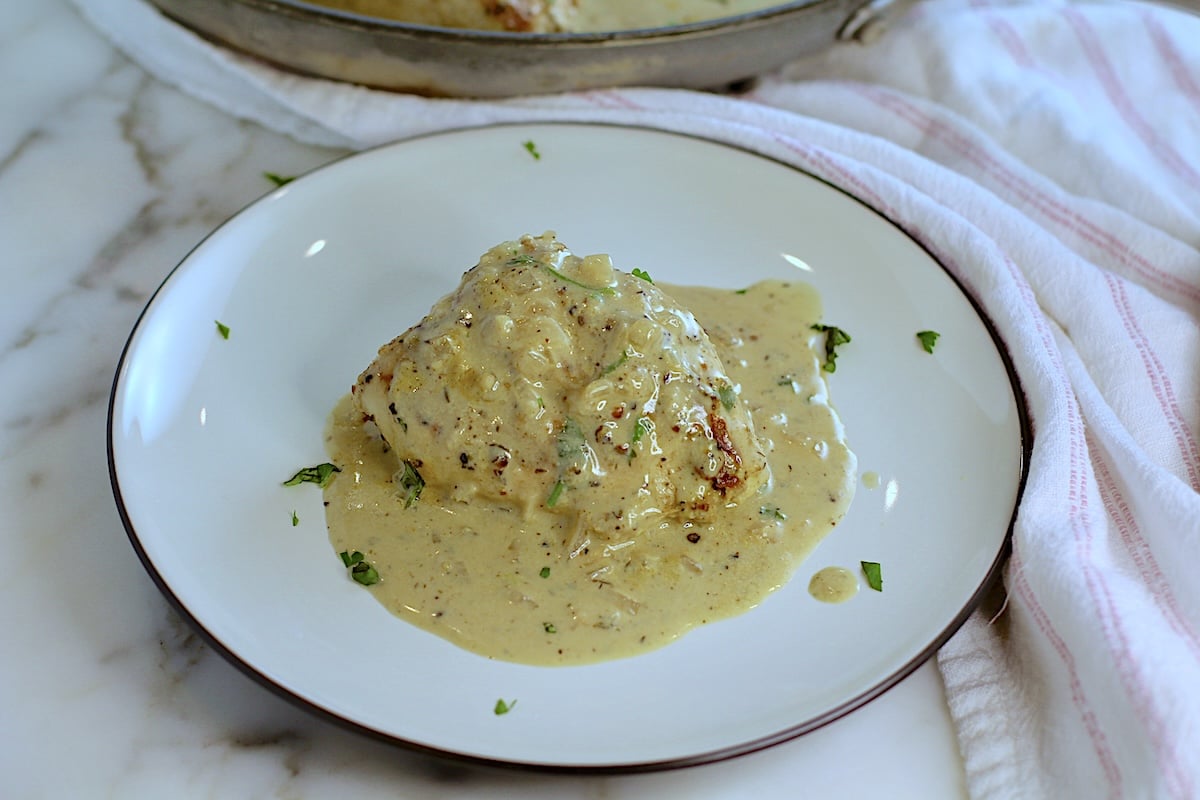
Talking Tip!
If you have small kids or any eaters that are sensitive to spicy things, here is my tip. You can wait to add the cracked black pepper to the sauce at the very end. Once the broth and half and half are done cooking with the chicken, transfer a portion of chicken and sauce to serve without the pepper and then add the desired amount of pepper to the remaining sauce in the pan (note, since you are reducing the amount of sauce, you will want to reduce the amount of black pepper.
Mince the garlic. Finely dice the shallots. Chop the parsley. Store all together in the fridge until ready to cook.
Cooking Steps
Preheat large pan/skillet over medium-high heat.
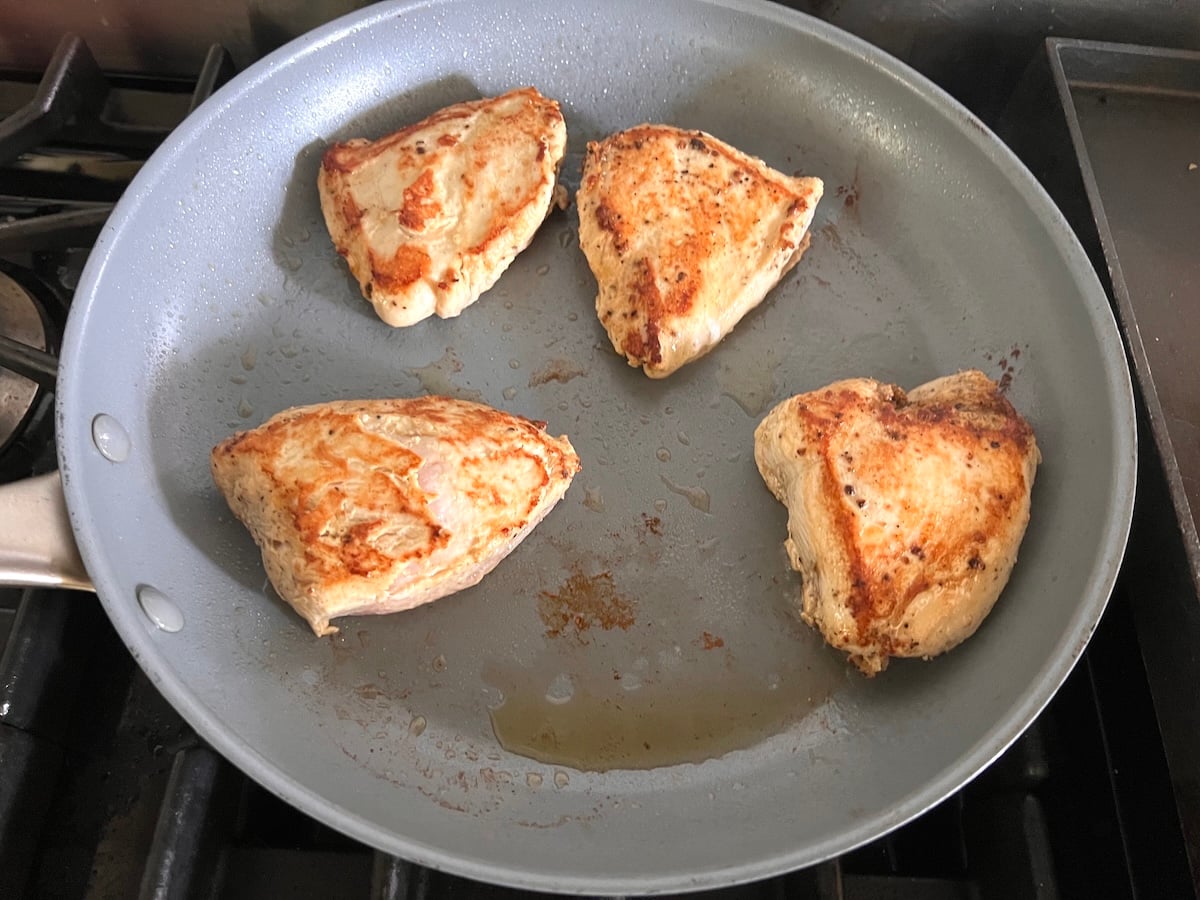
Add 2 teaspoon olive oil (enough to coat the bottom of pan) then add the marinated chicken to the pan and cook for 4-5 minutes until seared/browned on the bottom.
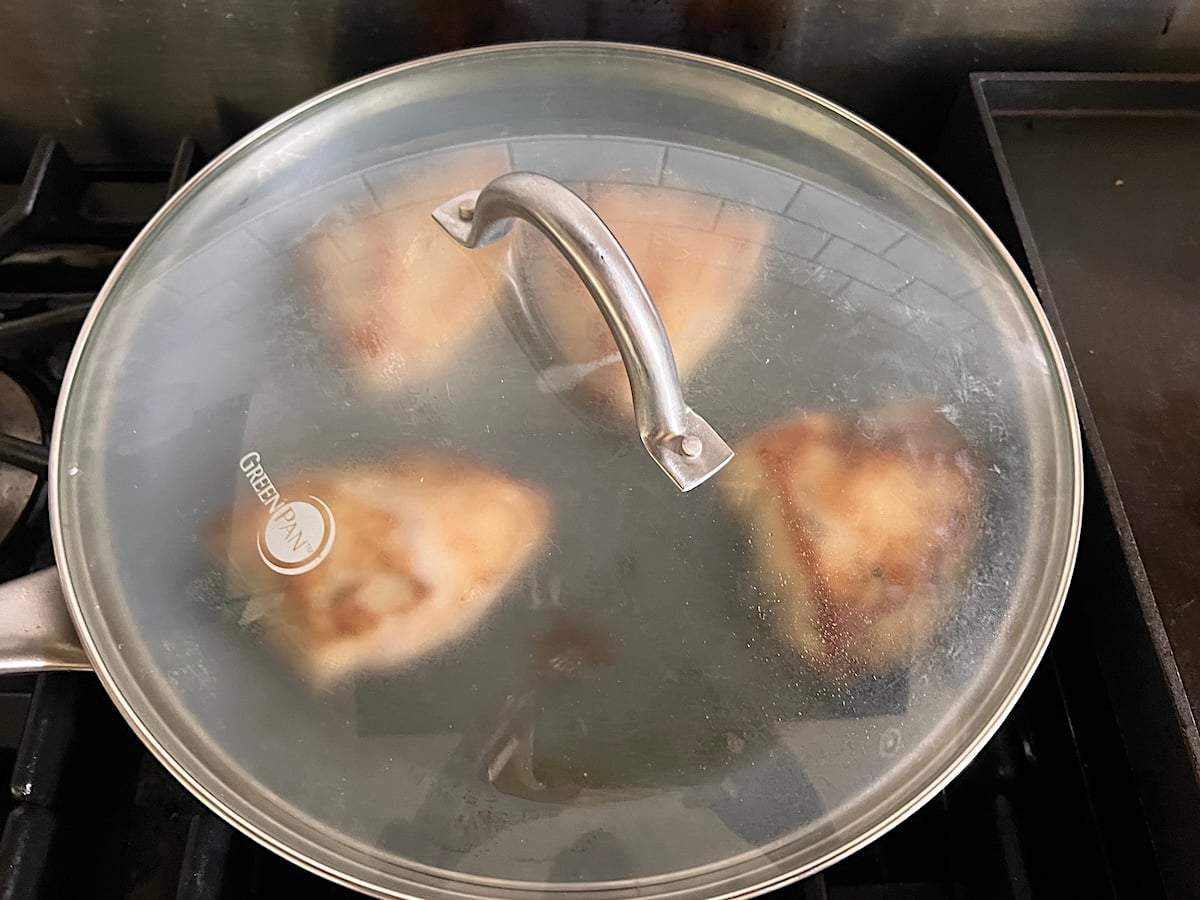
Flip and cook another 3-5 minutes, covered (lid or aluminum foil) or until the internal temperature reaches 160F. Transfer the chicken to plate or bowl and set aside. Note: the chicken will have additional time to finish cooking in the sauce.
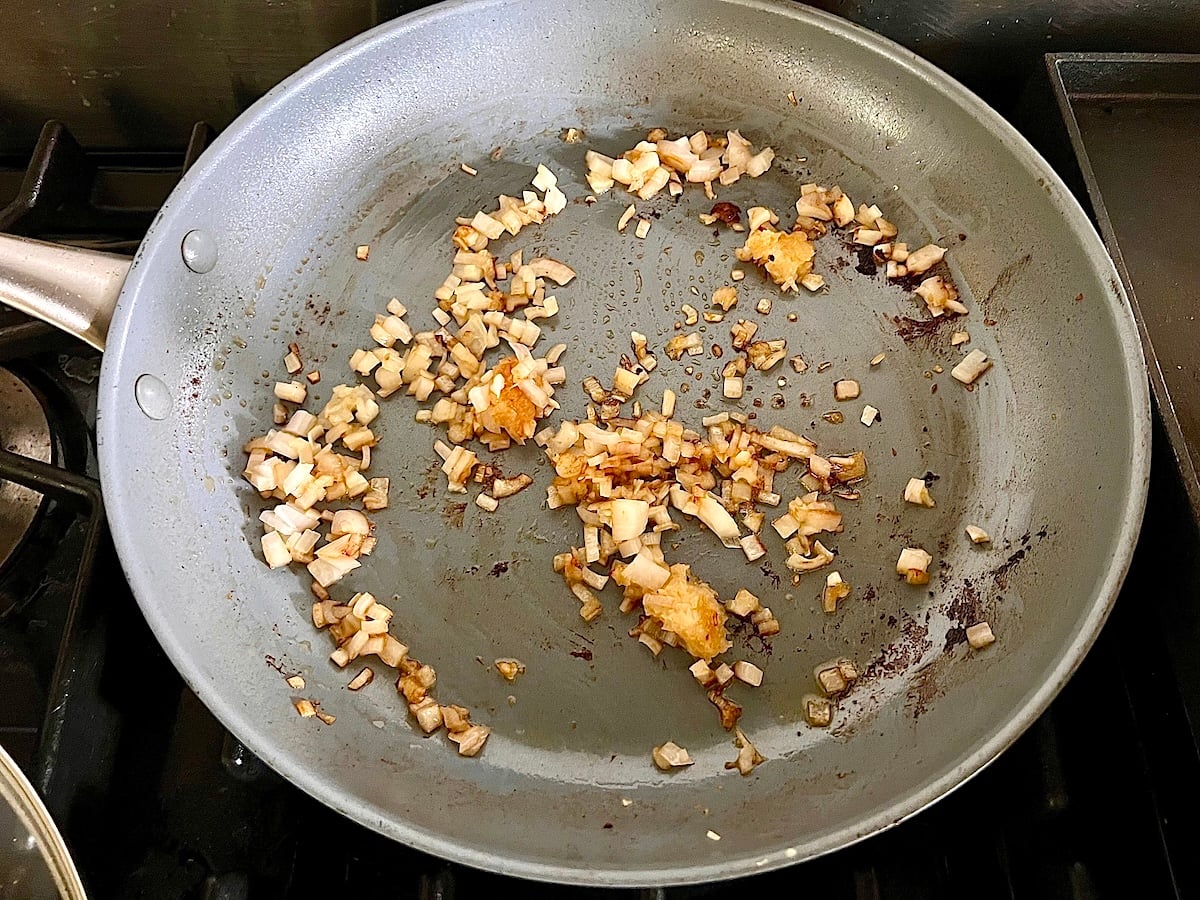
To same pan add another teaspoon of olive oil if needed, then the diced shallots and garlic.
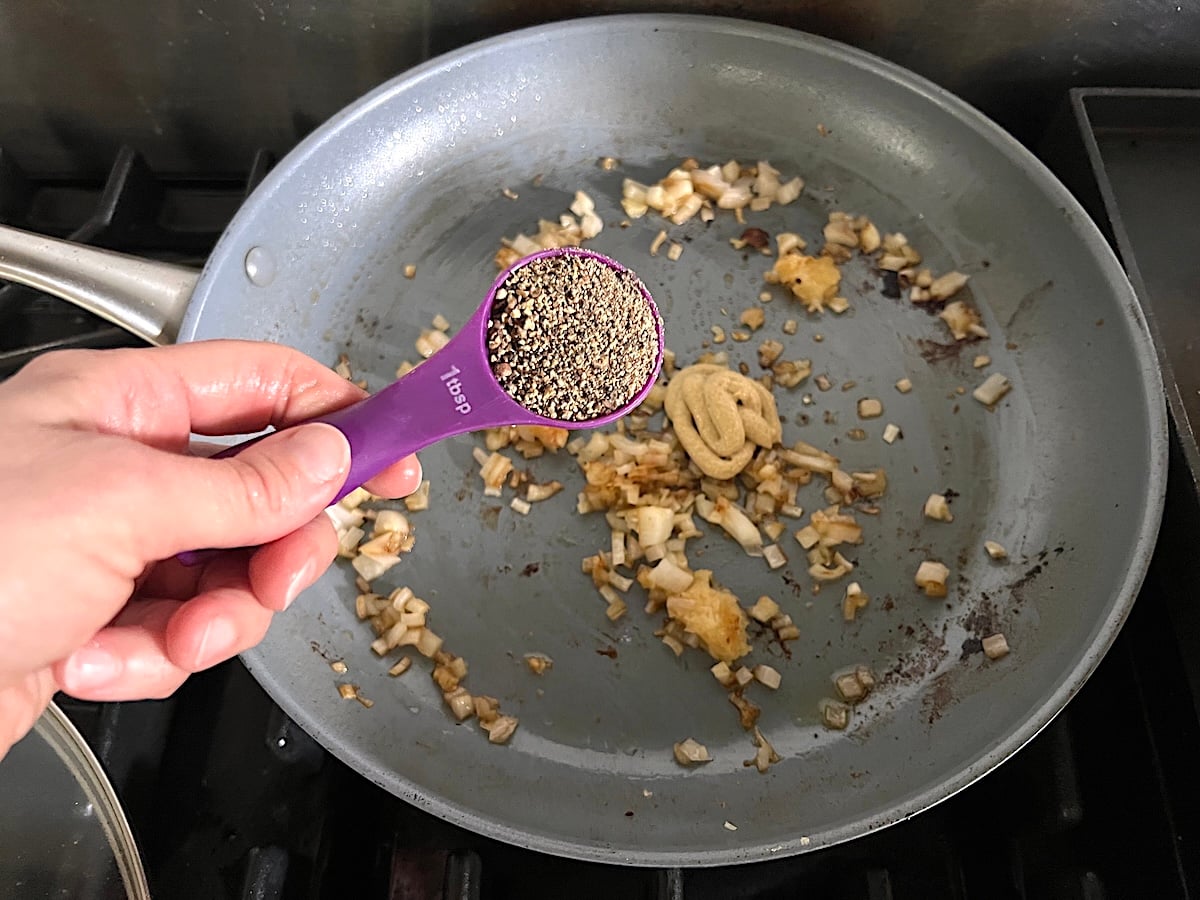
Saute for about 3-4 minutes. Then stir in the Dijon Mustard and cracked black pepper.
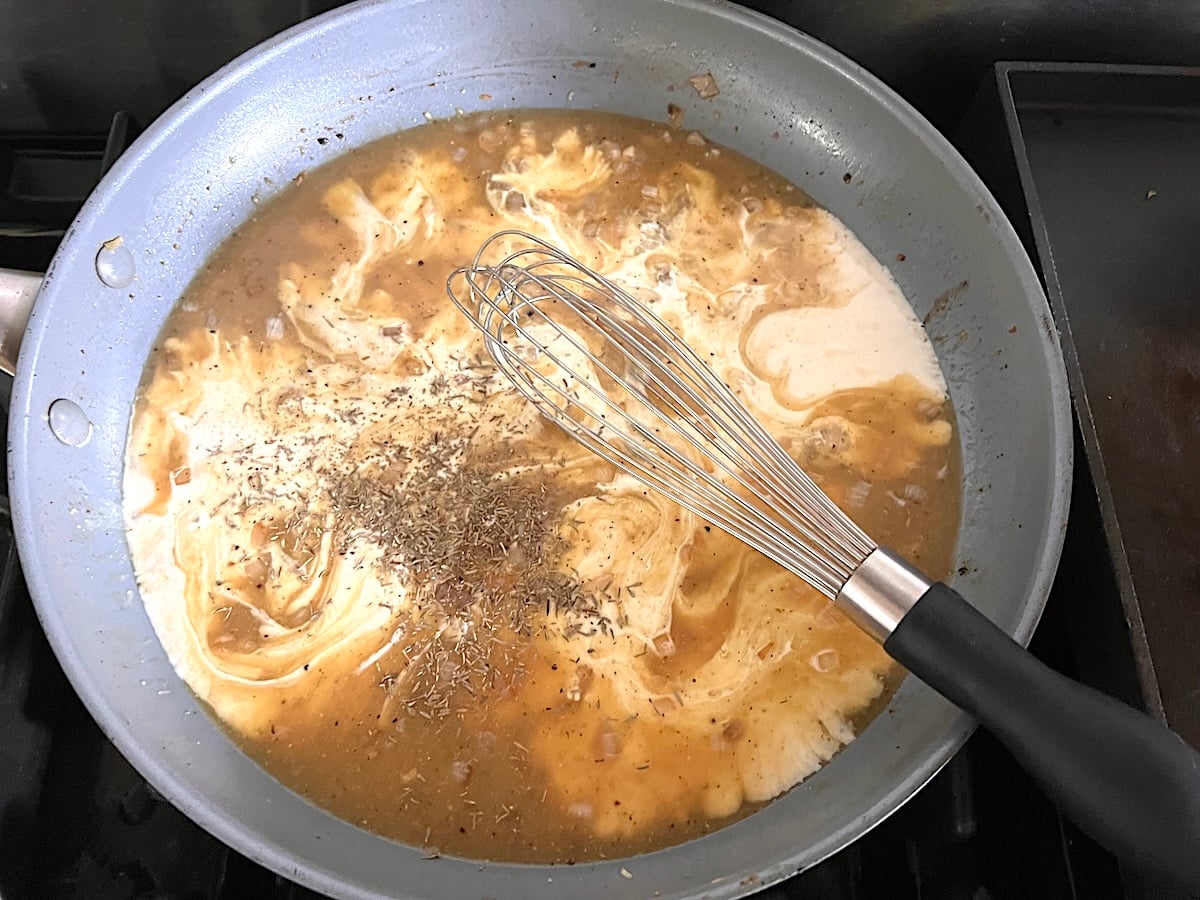
Add the broth and the half and half (or heavy cream), thyme, parsley, and additional ½ teaspoon salt.
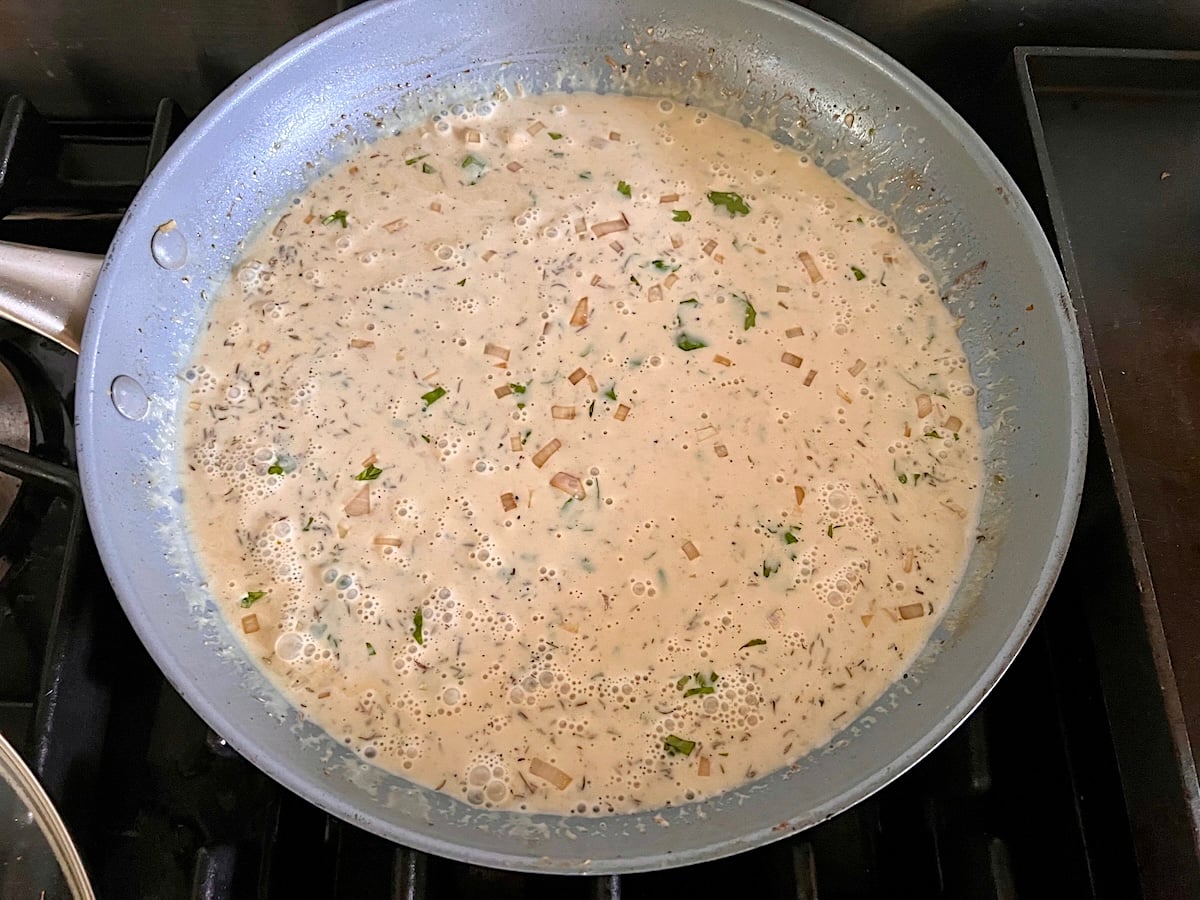
Stir to combine and bring to a light simmer over medium heat.
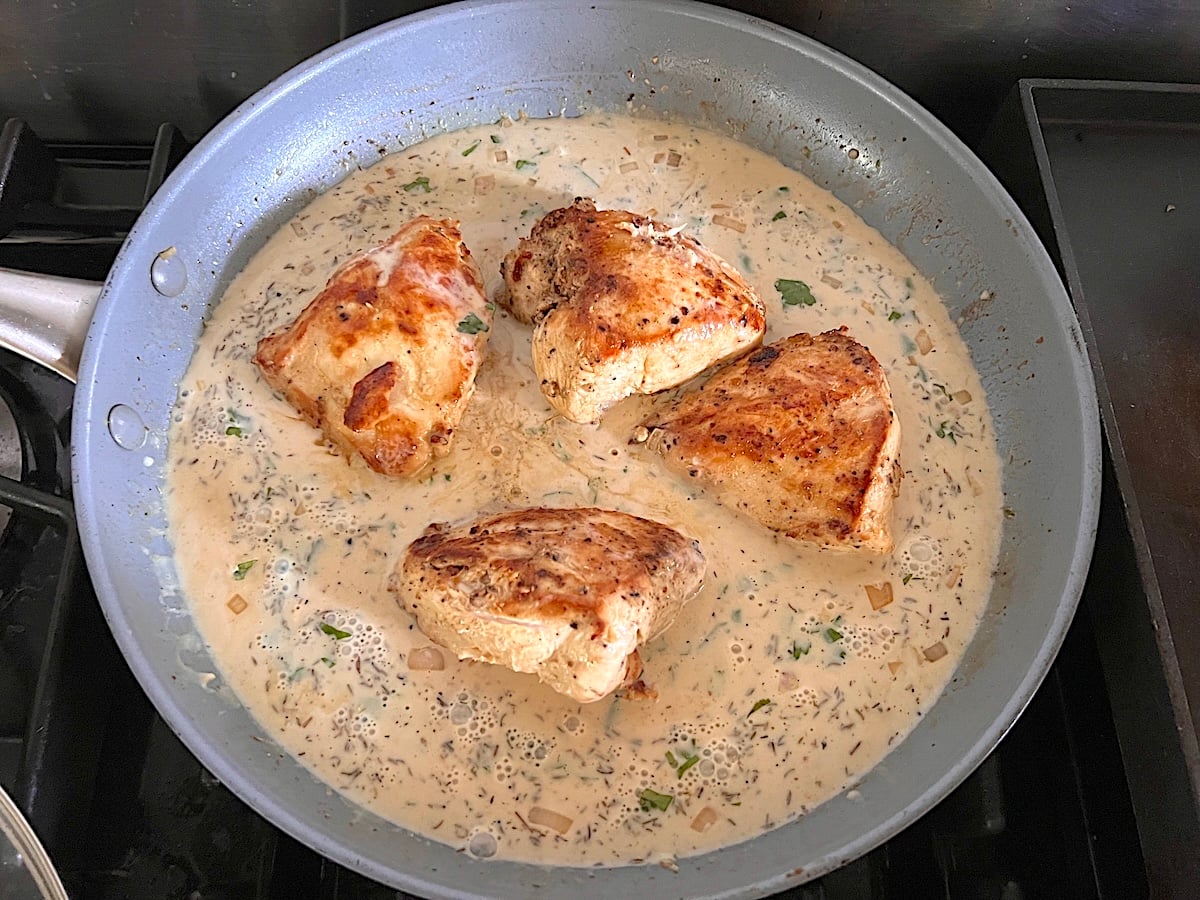
Add the chicken and all of the juices on the plate to the sauce.
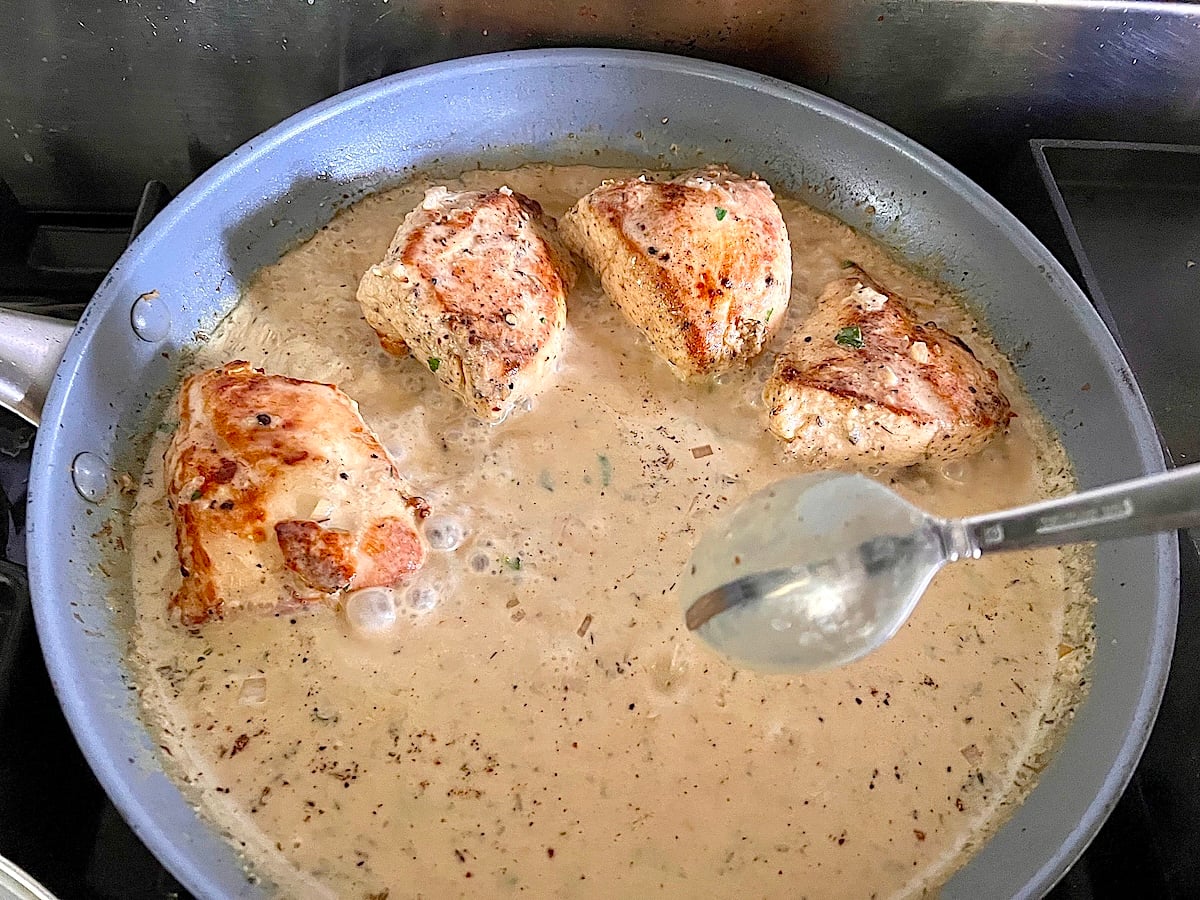
Coat the chicken with the sauce and then simmer for another 5 minutes until the sauce has thickened and leaves a trail when you run your finger along the back of a spoon and the chicken has reached an internal temperature of 165℉.
I like to serve this chicken with Baby Potatoes in Garlic Butter and Sage. You can serve it with mashed potatoes, Mashed Roasted Cauliflower and Garlic, rice, pasta or quinoa.
Variations on the recipe
Here are some variations on this recipe.
- Make It With Chicken Thighs: Boneless, skinless chicken thighs work beautifully in this recipe and are naturally juicy and flavorful. Just adjust the cooking time as needed and cook the chicken to 165°F.
- Make the Sauce Extra Peppery: If you really love black pepper, add a little extra freshly cracked pepper to the finished sauce. That’s what gives Chicken Au Poivre its signature flavor!
- Use Heavy Cream: Half-and-half keeps the sauce a little lighter, while heavy cream makes it richer and thicker. Either works well, so use whichever you have in the fridge.
- Add Mushrooms: Sauté sliced mushrooms with the shallots and garlic before adding the Dijon and pepper. They add an earthy flavor that works really well with the creamy sauce.
- Add a Splash of Brandy: For a more traditional French-inspired flavor, deglaze the skillet with a small splash of brandy after sautéing the shallots and garlic. Let it cook for a minute or two before adding the broth and cream.
Chicken Au Poivre Recipe FAQs
“Au poivre” is French for “with pepper.” The classic preparation is known for a generous amount of cracked black pepper and a creamy pepper sauce.
It has a noticeable peppery kick, but it’s not spicy in the same way as hot peppers or chili peppers. The cream and Dijon help balance the bold flavor of the black pepper. If you’re sensitive to pepper, you can reduce the amount slightly.
Yes, boneless, skinless chicken thighs are a great substitute. Just be sure to cook them to an internal temperature of 165°F.
You can definitely do some of the work ahead. Season the chicken and chop the shallot, garlic, and parsley up to 2 days in advance and store everything separately in the refrigerator. Then the actual cooking comes together quickly at dinnertime.
This creamy sauce is begging for something to soak it up! Try mashed potatoes, roasted potatoes, rice, pasta, quinoa, or your favorite grain. A simple green vegetable or salad would also make a great side.
Yes, although the sauce will have a different texture and flavor. You can either substitute in more broth or add a creamy non-dairy alternative. Unsweetened, unflavored dairy-free cooking cream or a plain unsweetened coconut milk can work. Start with a smaller amount and adjust the consistency as needed.
Store leftover chicken and sauce in an airtight container in the refrigerator for up to 3 days. Reheat gently on the stovetop or in the microwave, adding a splash of broth or cream if the sauce has thickened too much.
Have you tried this recipe? If so, please leave a ⭐️⭐️⭐️⭐️⭐️ star rating in the recipe below! I love to hear your feedback and your rating helps others to find this recipe. Thanks so much!
Chicken Au Poivre with Chicken Breasts

Ingredients
Chicken
- 2 pounds Chicken breast boneless skinless
- 1 Tablespoon Dijon Mustard
- 1 teaspoon Salt
- 2 teasponns Fresh Ground black pepper
- 2 teaspoon Extra virgin olive oil
Sauce
- 2 teaspoon Extra virgin olive oil
- 1 Medium Shallot finely diced
- 1 teaspoon Garlic minced
- 1 Tablespoon Fresh Cracked Black Pepper
- 1 tablespoon Dijon Mustard
- 1 cup Chicken Broth
- 1 Cup Half and Half or Heavy Cream
- 2 Tablespoon Fresh Italian Parsley chopped
- ½ teaspoon Thyme
- ½ teaspoon salt
- 1 Tablespoon Italian Parsley chopped (optional for garnish)
Instructions
Prep Ahead Steps
- Mince the garlic. Finely dice the shallots. Chop the parsley. Store all together in the fridge until ready to cook.
- Cut the chicken breasts in half, tring to get even weight on both halves. Rub the pieces in 1 tablespoon Dijon Mustard, then season with 1 teaspoon salt and 2 teaspoon pepper. You can cook right now or store this in an airtight bag or container in the fridge for up to 2 days.
Cooking Steps
- Preheat large pan/skillet over medium-high heat. Add 2 teaspoon olive oil (enough to coat the bottom of pan) then add the marinated chicken to the pan in a single layer and cook for 4-5 minutes until seared on the bottom. Flip and cook another 3-5 minutes, covered (lid or aluminum foil) or until the internal temperature reaches 160F. Transfer the chicken to plate or bowl and set aside. Note: the chicken will have additional time to finish cooking in the sauce.
- To same pan add another teaspoon of olive oil if needed, then the diced shallots and garlic. Saute for about 3-4 minutes. Then stir in the Dijon Mustard and cracked black pepper.
- Add the broth and the half and half (or heavy cream), thyme, parsley, and additional ½ teaspoon salt. Stir to combine and bring to a light simmer over medium heat.
- Add the chicken and all of the juices on the plate to the sauce. Coat the chicken with the sauce and then simmer for another 5 minutes until the sauce has thickened and leaves a trail when you run your finger along the back of a spoon and the chicken has reached an internal temperature of 165℉.
- Serve with potatoes, rice, pasta, quinoa, or your favorite grain. Enjoy!

Comments
No Comments