
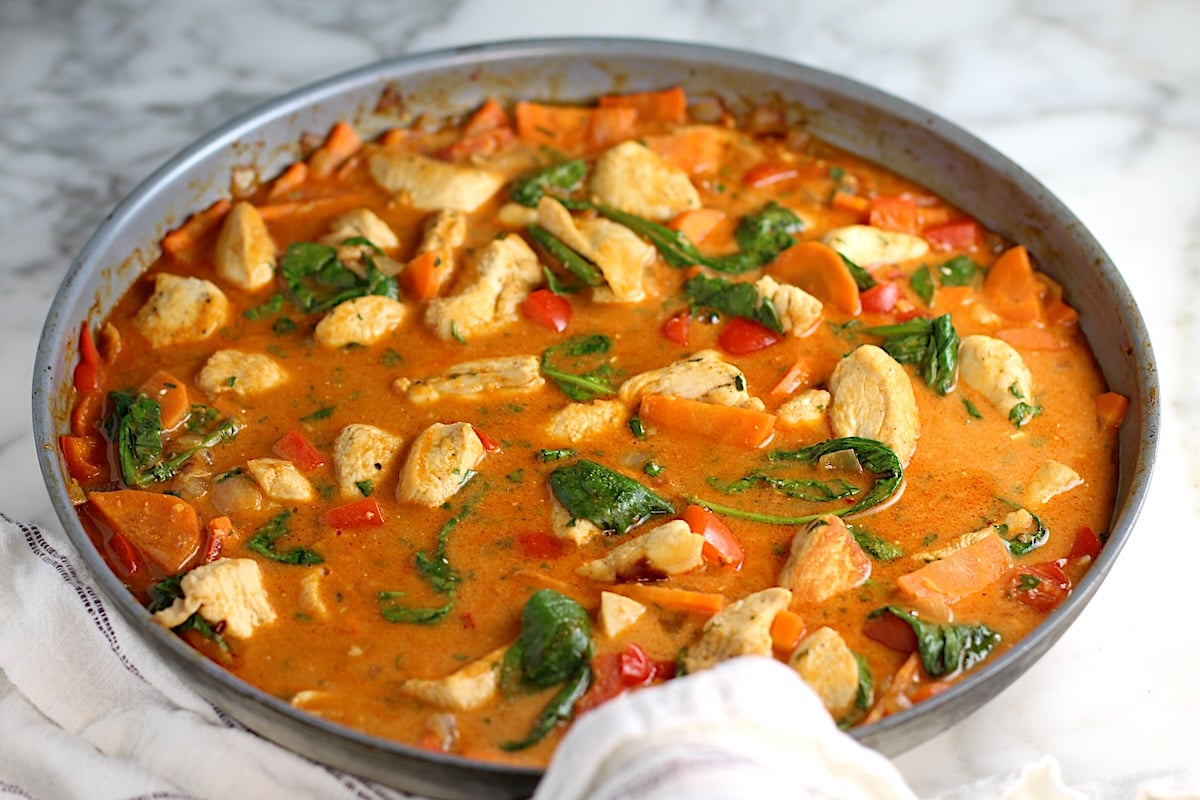
This Thai Curry Chicken is a quick and easy 30-minute skillet dinner with tender chicken, colorful vegetables, and a creamy coconut red curry sauce. Serve it over rice for a delicious homemade takeout-inspired meal!
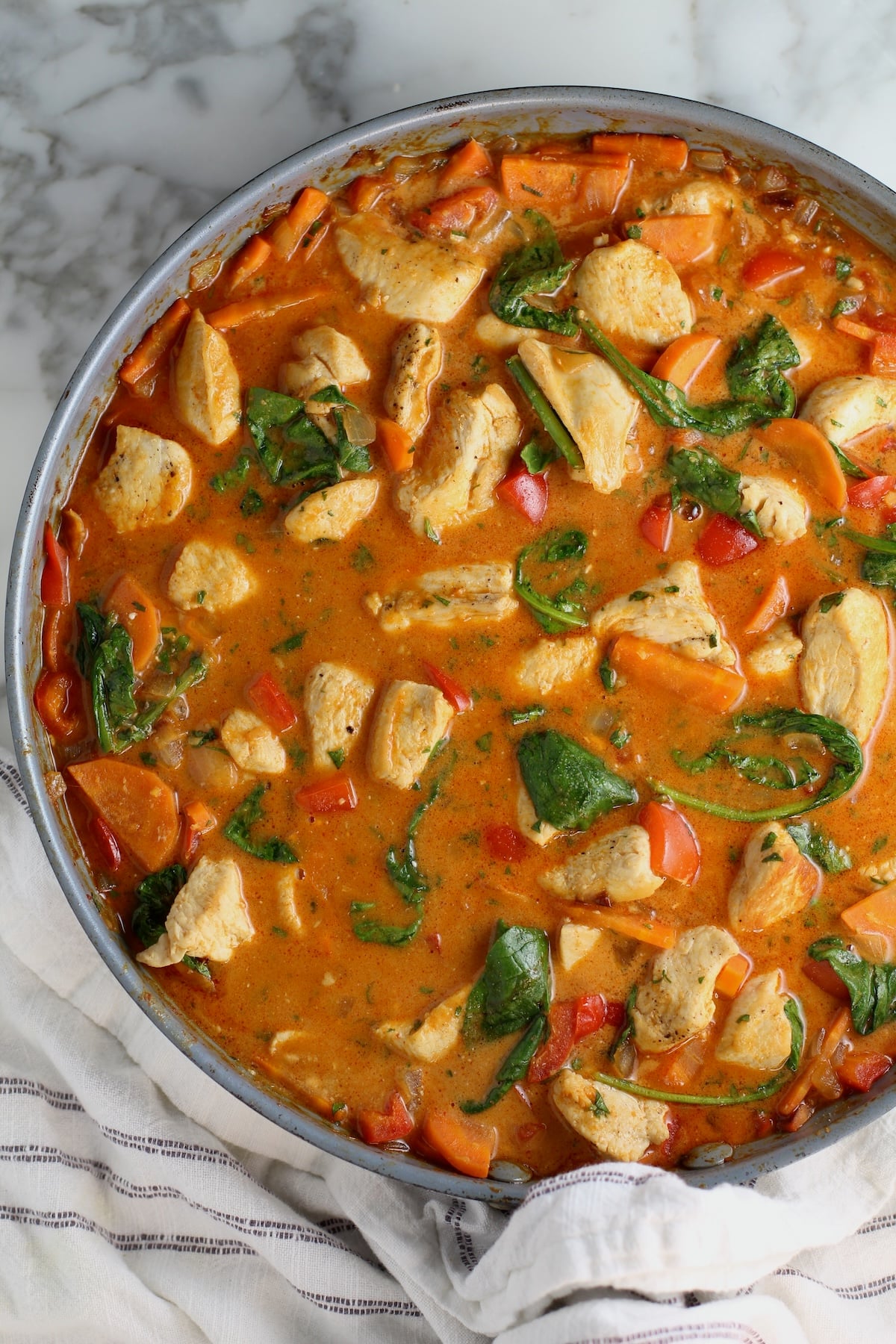
If you love Thai curry but usually save it for takeout night, I’ve got good news! You can make this Thai Curry Chicken right at home in about 30 minutes. Tender bites of chicken breast, colorful bell peppers, carrots, and spinach simmer together in a creamy coconut sauce flavored with Thai red curry paste, fresh ginger, garlic, and a squeeze of lime. It’s savory, a little sweet, a little spicy, and packed with so much flavor.
What I especially love about this recipe is that it tastes like you spent a lot more time on it than you actually did. Everything comes together in one skillet, and you can prep the chicken and vegetables over the weekend to make dinnertime even easier. Serve it over fluffy white rice, grab a spoon for that delicious curry sauce, and you’ve got a cozy, satisfying dinner that might just become your new favorite way to break out of the usual chicken routine!
Jump to:
Why You’ll Love this Thai Curry Chicken
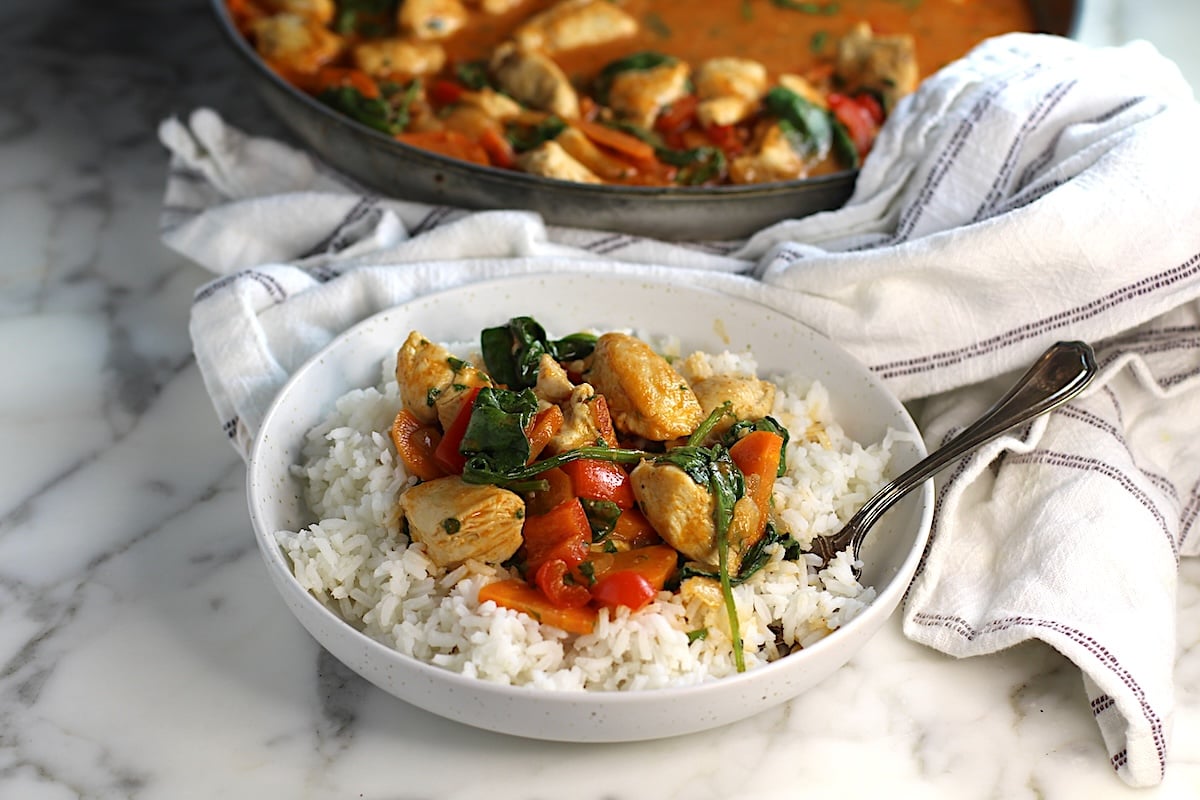
If you’re looking to shake up your usual chicken dinner routine, this one brings big flavor without making dinner any more complicated. It’s cozy, colorful, and has that delicious creamy curry sauce you’ll want to spoon over everything!
- Perfect for leftovers. The curry sauce is just as delicious reheated the next day!
- Ready in about 30 minutes. You can have a flavorful homemade curry on the table without spending the whole evening cooking.
- One skillet does most of the work. The chicken, vegetables, and creamy sauce all come together in the same pan, which means less cleanup.
- Big Thai-inspired flavor. Red curry paste, fresh ginger, garlic, coconut milk, and lime create a delicious combination of savory, sweet, tangy, and spicy.
- A great way to eat more vegetables. Carrots, bell peppers, and spinach add color, texture, and extra goodness to dinner.
- Creamy without being too heavy. Coconut milk gives the sauce a silky texture and rich flavor.
- Easy to prep ahead. Chop the vegetables, mince the aromatics, and cut the chicken over the weekend so everything is ready to go.
- Easy to customize. Adjust the curry paste for more or less heat, swap the vegetables, or use chicken thighs instead of breasts.
Simple Ingredients and Substitutes
Quick note! This post contains affiliate links, which means I earn a commission (at no extra cost to you) if you purchase from them. This commission is what helps me keep this blog afloat :). I also share these links because I have used the products, genuinely love them, and want you to know exactly what I used.
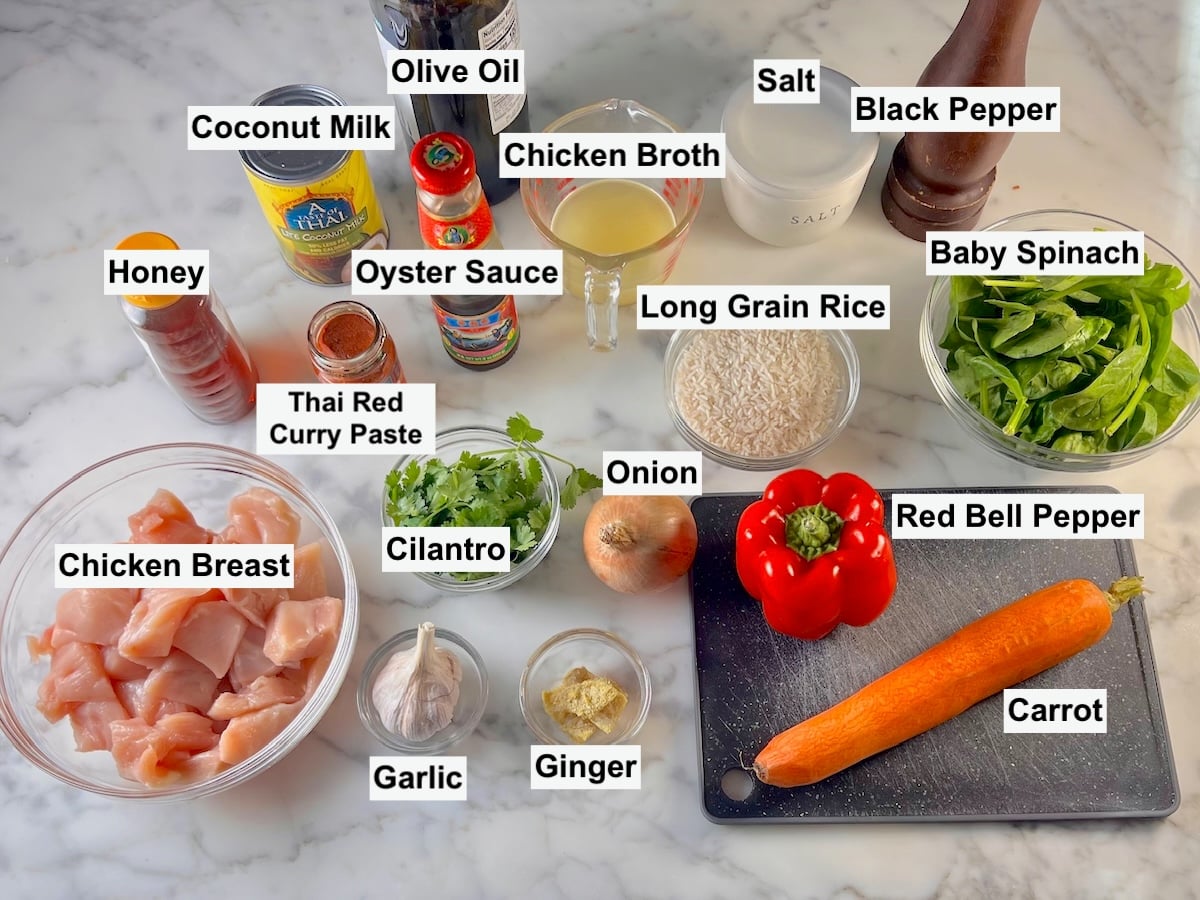
- Chicken Breasts: Boneless, skinless chicken breasts cut into bite-sized pieces cook quickly and soak up all that delicious curry sauce. You can also use boneless, skinless chicken thighs.
- Olive Oil: Used to sear the chicken and sauté the vegetables. Avocado oil or another neutral cooking oil works too.
- Yellow Onion: Adds sweetness and savory flavor. A white onion or 2–3 shallots can be used instead.
- Carrots: Thinly sliced carrots add color, natural sweetness, and a little crunch. You can substitute sliced zucchini or snap peas.
- Red Bell Pepper: Adds sweetness, color, and texture. Orange or yellow bell pepper works just as well.
- Fresh Ginger: Minced fresh ginger brings a warm, slightly zippy flavor. You can substitute ½ teaspoon ground ginger if needed, although fresh is best.
- Garlic: Fresh minced garlic adds another layer of savory flavor. You can use ½ teaspoon garlic powder in a pinch.
- Thai Red Curry Paste: This is the key ingredient for building the curry’s signature flavor. It adds a savory, aromatic blend of chilies and spices. You can use yellow or green Thai curry paste instead, but the flavor and heat will be different. Start with a little less if you’re sensitive to spice.
- Coconut Milk: A 13.5-ounce can creates the creamy, rich base for the curry sauce. Full-fat coconut milk gives the richest texture, but light coconut milk works if you prefer a lighter sauce.
- Chicken Broth: Helps thin the coconut milk into a delicious sauce. Vegetable broth works as a substitute.
- Oyster Sauce: Adds a salty, savory, umami flavor. Fish sauce or soy sauce can be substituted, although the flavor will be slightly different. For a vegetarian option, use vegetarian mushroom stir-fry sauce.
- Honey: Balances the savory curry paste with a touch of sweetness. Maple syrup or brown sugar works too.
- Salt & Black Pepper: Bring all the flavors together. Adjust the salt to taste since curry paste and oyster sauce can already be salty.
- Baby Spinach: Wilts right into the warm curry sauce. You can substitute chopped kale, although it will need a few extra minutes to soften.
- Fresh Cilantro: Adds a fresh, herby finish. If you’re not a cilantro fan, simply leave it out or use chopped Thai basil.
- Fresh Lime Juice: Adds a bright, citrusy finish that balances the richness of the coconut milk. If you don’t have a lime, you can leave it out or use a little fresh lemon juice instead.
- White Rice: Cooked white rice is perfect for soaking up all that creamy coconut curry sauce. Jasmine rice is especially delicious, but brown rice, basmati rice, or even cauliflower rice are great alternatives.
See recipe card for quantities.
Simple Tools and Equipment
You don’t need any fancy equipment to make this Thai Curry Chicken! Just a few basic kitchen tools will help make prep and cooking easy.
- Chef’s Knife & Cutting Board: For cutting the chicken into bite-sized pieces and prepping all the vegetables, ginger, garlic, and cilantro.
- Large Skillet with Lid: A large, deep skillet gives you plenty of room to sear the chicken, sauté the vegetables, and simmer everything together in that creamy curry sauce. A lid helps the chicken cook through evenly. I use my absolute favorite 12″ Ceramic Pan.
- Measuring Cups & Spoons: Helpful for measuring the coconut milk, broth, curry paste, and seasonings so you get the sauce just right.
- Garlic Press or Microplane: Makes quick work of prepping the garlic and fresh ginger. You can also mince both with your knife.
- Citrus Juicer: Makes squeezing fresh lime juice easy and helps you get every last bit of juice into the curry.
- Rice Cooker or Saucepot with Lid: Use either one to cook the rice while the curry simmers. One less thing to worry about when dinner time rolls around!
Time Saving Prep-Ahead Steps
Want to make dinner come together even faster? Spend a little time prepping these ingredients over the weekend, and you’ll have most of the work out of the way when you’re ready to cook!
Prep the Chicken: Cut the chicken into bite-sized pieces and store in an airtight container in the refrigerator for up to 1–2 days, or freeze for longer storage. Thaw overnight in the refrigerator before cooking.
Chop the Vegetables & Aromatics: Dice the onion and bell pepper, slice the carrots, and mince the garlic and ginger. Store together or in separate containers in the refrigerator for up to 3 days.
Make a Curry Sauce Kit: Measure the chicken broth, oyster sauce, and honey into a small container. Keep the curry paste separate and leave the coconut milk in its can until you’re ready to cook.
Get the Finishing Touches Ready: Wash and dry the spinach, chop the cilantro. Store the spinach and cilantro separately so everything stays fresh.
Cooking Steps
Start the Rice First: Get your rice cooking before you start the curry so it’s ready right when the chicken and vegetables are finished. Jasmine rice is especially delicious with the coconut curry sauce!
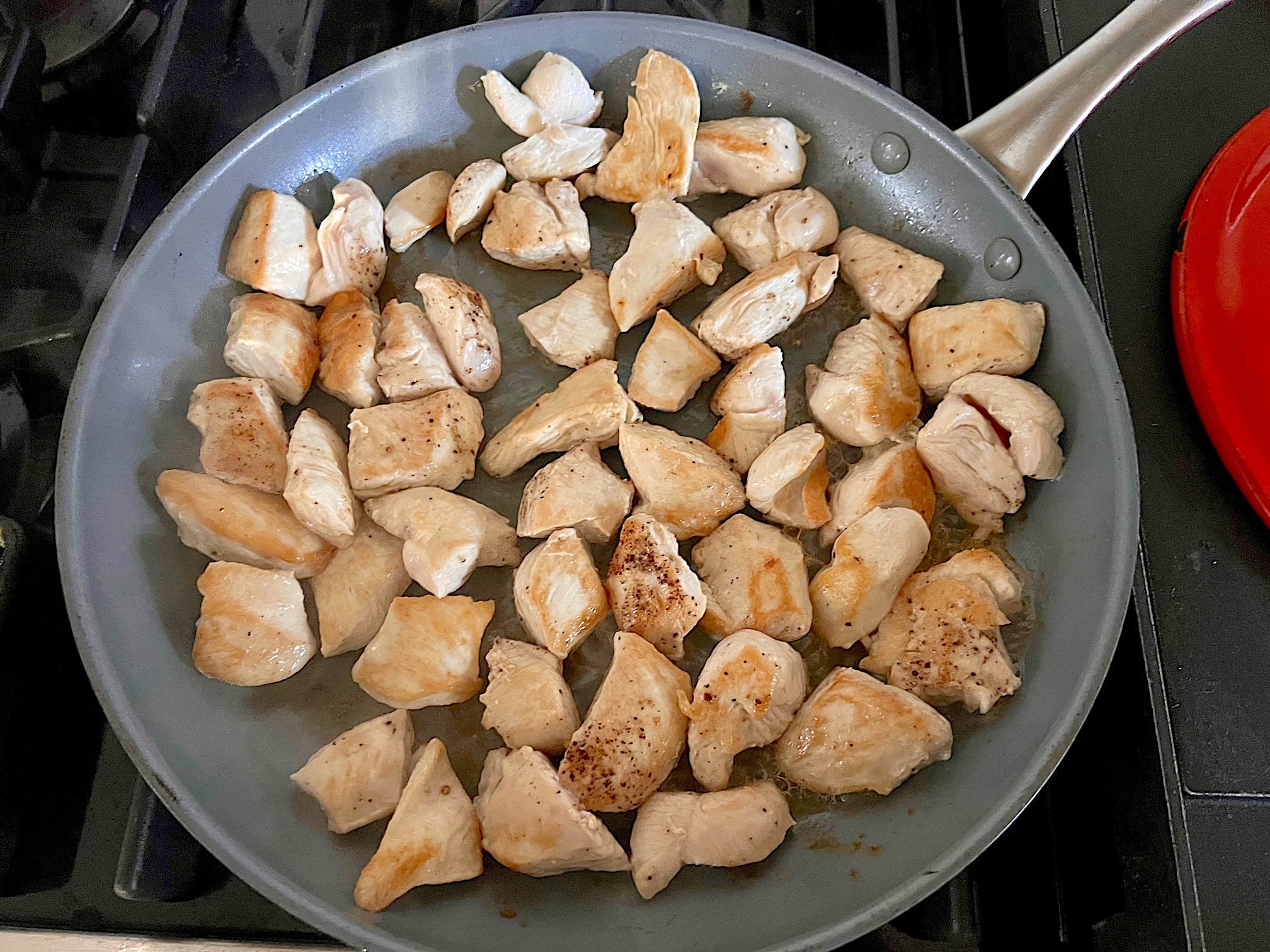
Give the Chicken Room to Sear: If your skillet feels crowded, cook the chicken in two batches. This helps it brown rather than steam, adding more flavor to the finished dish.
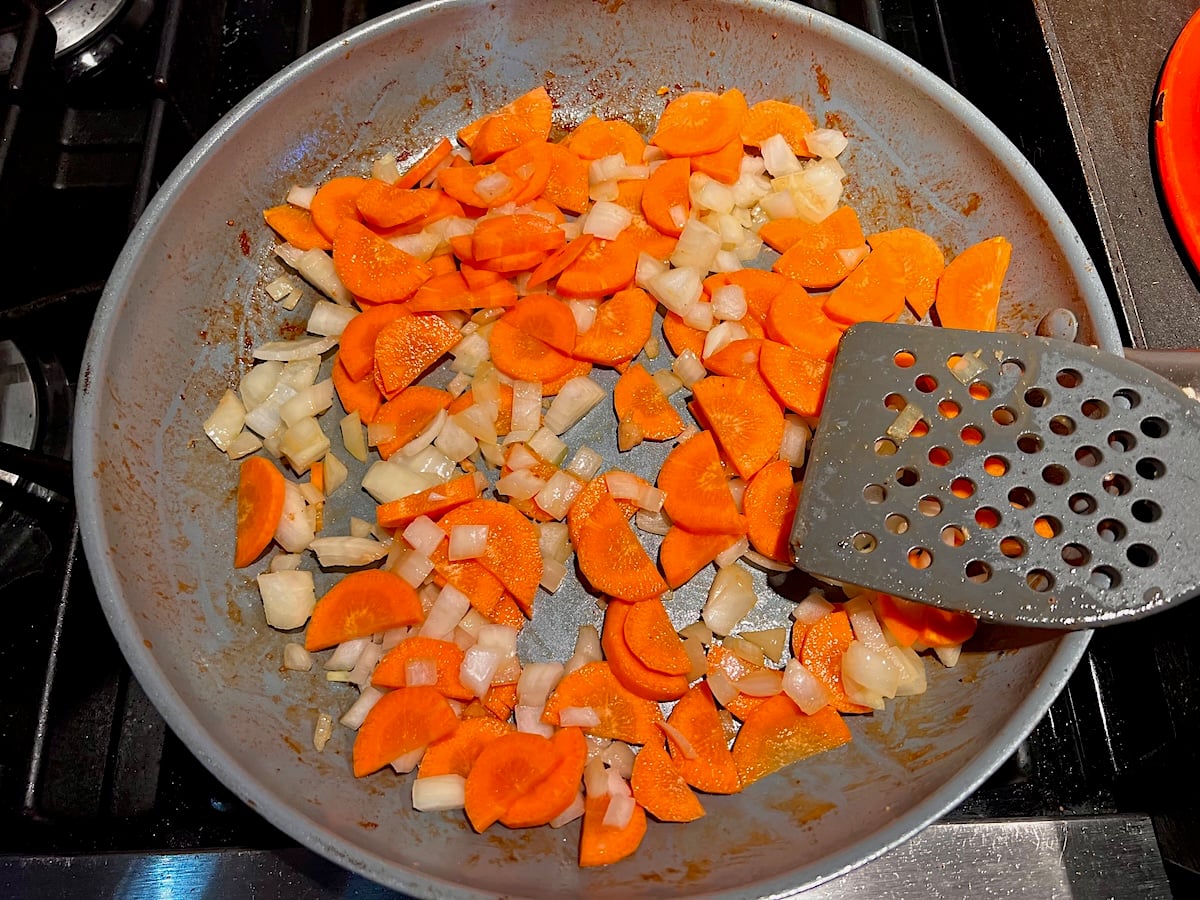
If the skillet looks dry after removing the chicken, add a drizzle of olive oil before cooking the vegetables.
Talking Tip!
Give that can of coconut milk a really good shake before opening! The thick cream and liquid like to separate, so a little shake-shake gets everything blended into a smooth, creamy base for your curry sauce!
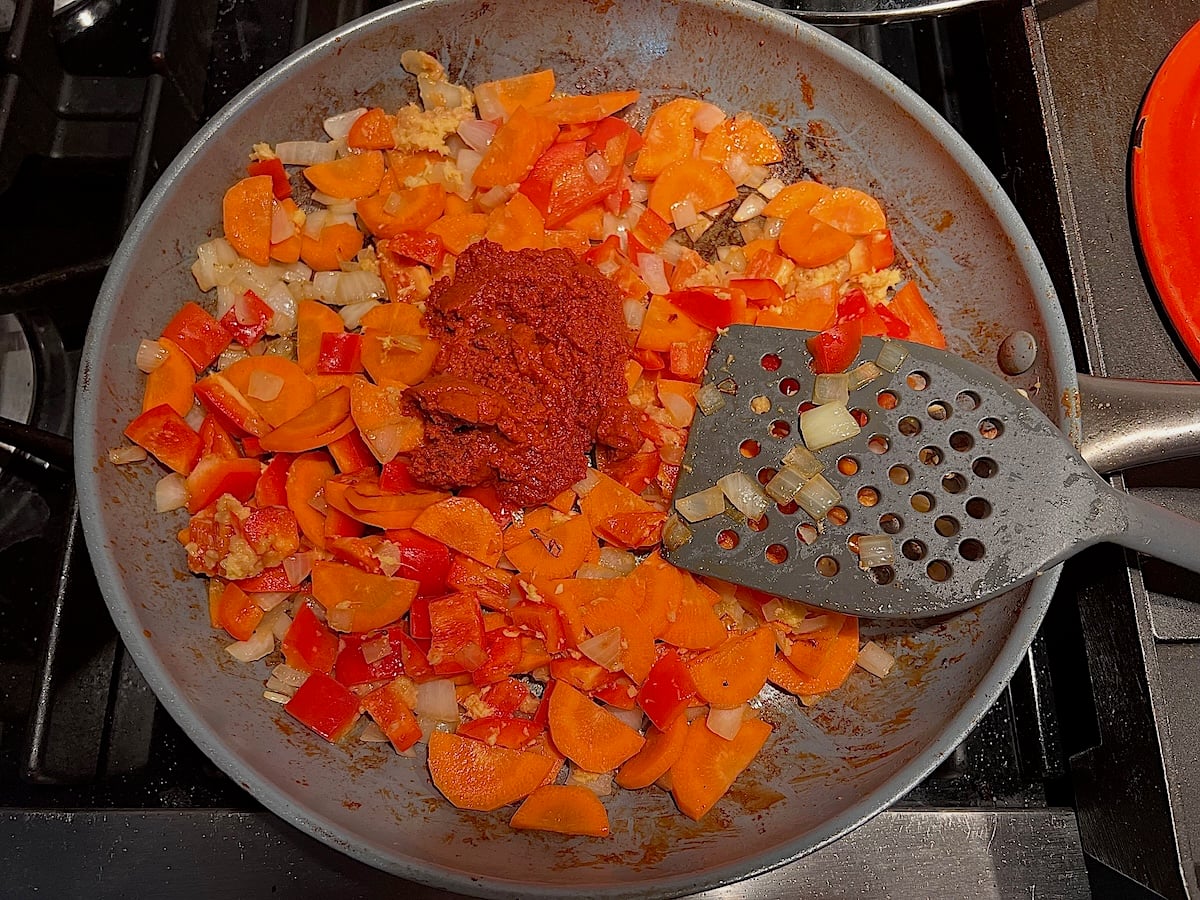
Don’t Rush the Curry Paste: Stir the red curry paste into the sautéed vegetables for about a minute before adding the coconut milk and broth. This helps release its aromatic flavors.
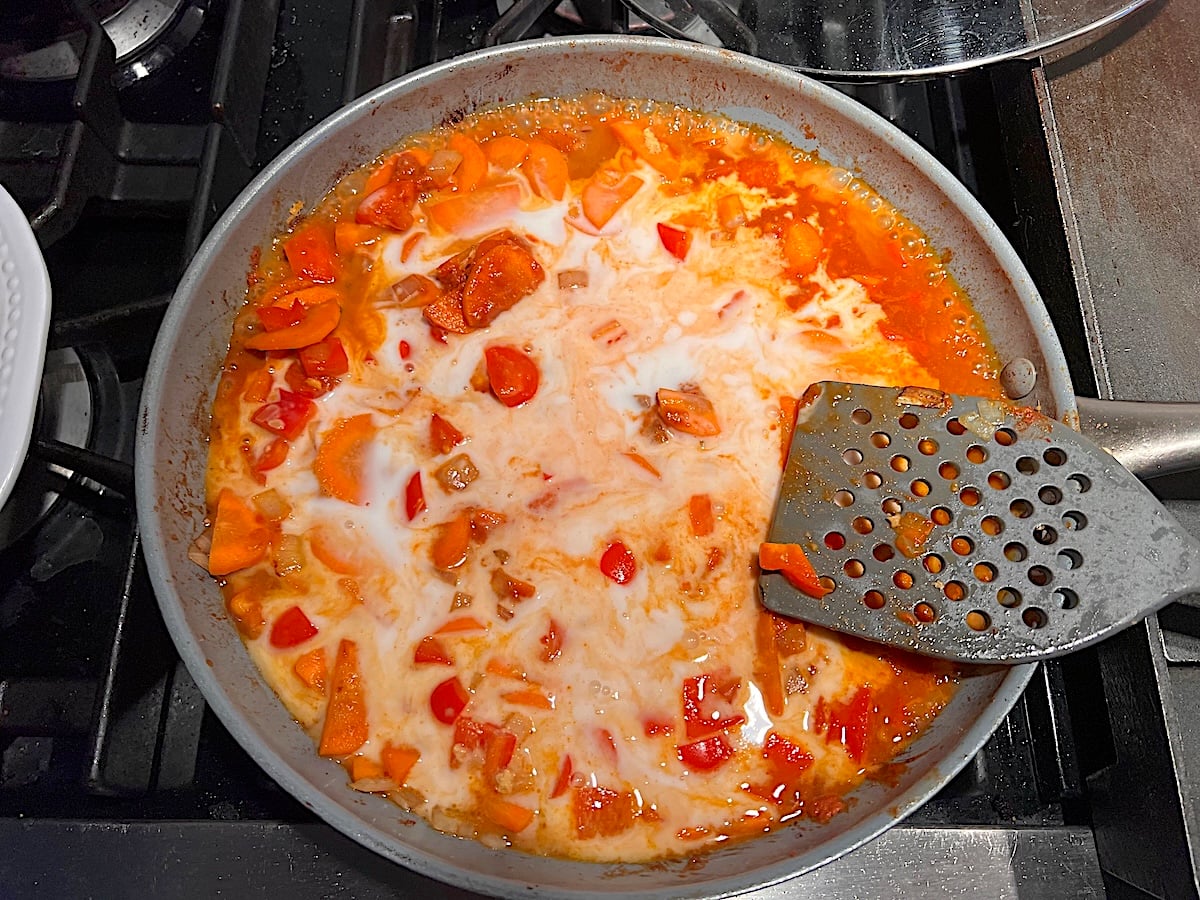
Keep the Sauce at a Gentle Simmer: Once you add the coconut milk, avoid bringing the sauce to a rapid boil. A gentle simmer keeps the sauce creamy and smooth while the chicken cooks through.
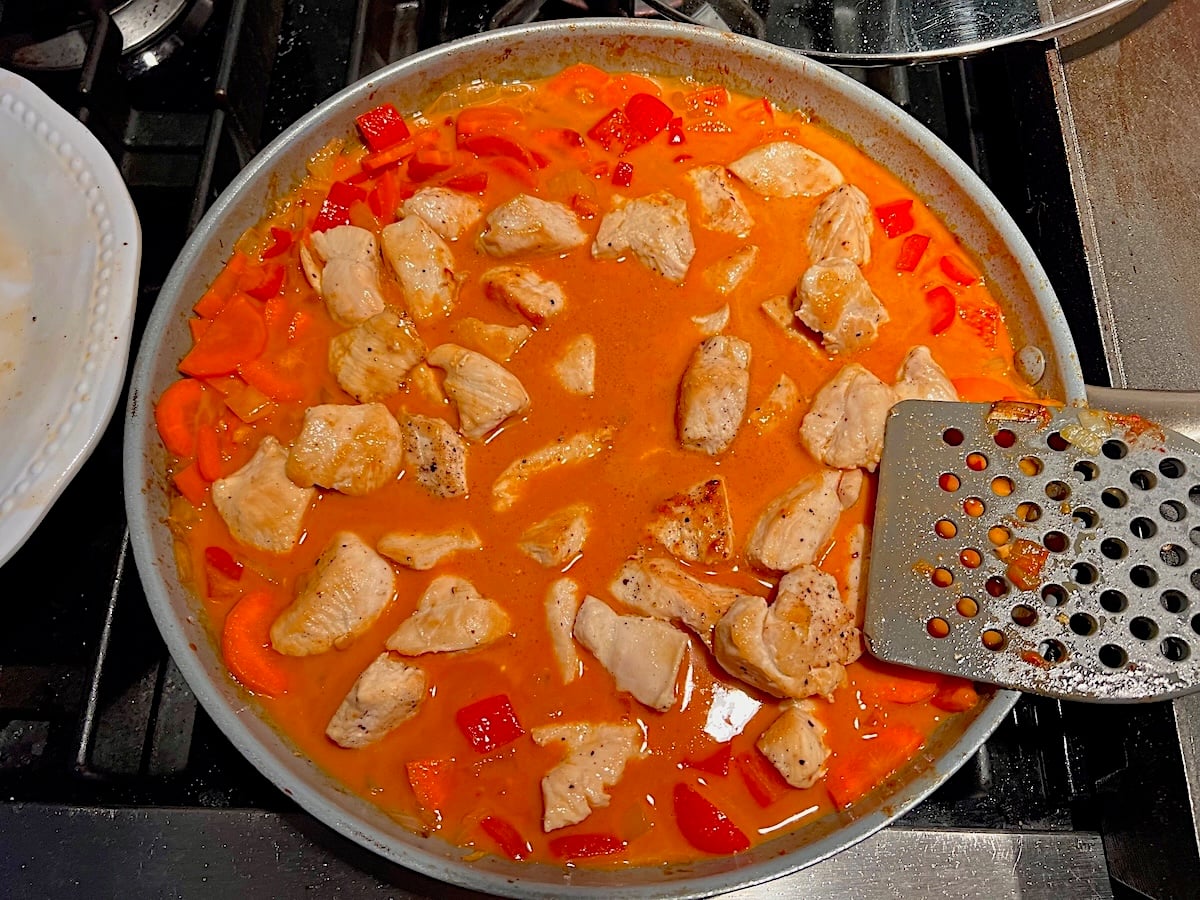
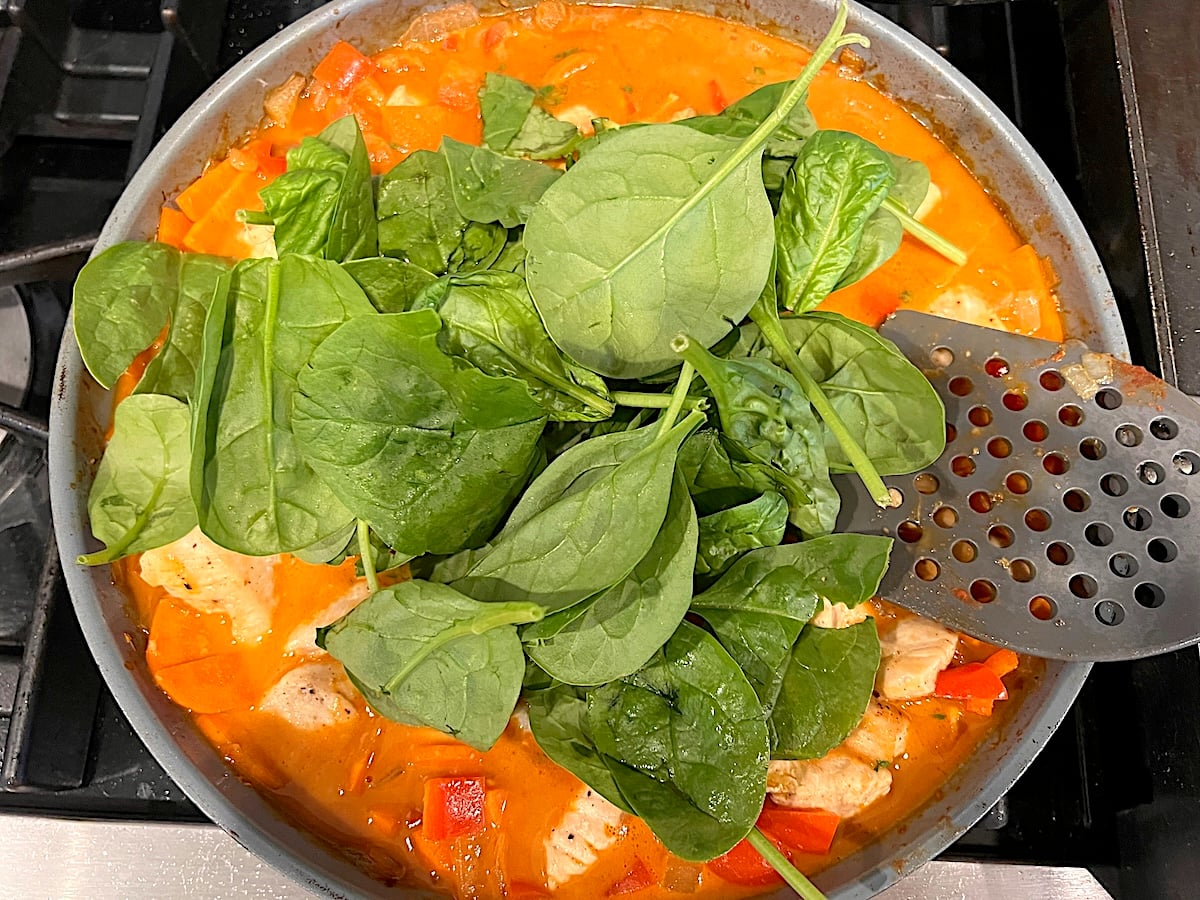
Finish with Lime and Cilantro: Add the fresh lime juice and cilantro at the end. They brighten up the rich coconut sauce and bring all those curry flavors together. Taste and adjust the salt or lime before serving.
Variations on the recipe
One of the things I love about this curry is how easy it is to switch things up depending on what you have in the fridge or how much heat your family likes. Here are a few easy ways to make it your own!
- Make It Spicier: Add another teaspoon of Thai red curry paste or a pinch of crushed red pepper flakes. You can also serve it with sliced fresh Thai chilies for anyone who wants extra heat.
- Use Chicken Thighs: Swap the chicken breasts for boneless, skinless chicken thighs. They’re naturally juicy and flavorful and work beautifully in the coconut curry sauce. Cook to an internal temperature of 165°F.
- Change Up the Vegetables: Try broccoli florets, snap peas, zucchini, mushrooms, or thinly sliced green beans. It’s a great way to use up whatever vegetables you have in the fridge!
- Add More Protein: Add peeled shrimp during the last few minutes of cooking, or stir in cubed firm tofu for a different protein option.
- Make It Gluten-Free: This recipe is naturally dairy-free, but to make it gluten-free, check the labels on your curry paste, chicken broth, and oyster sauce to ensure they’re gluten-free.
Recipe FAQs
Thai red curry paste is a concentrated blend of ingredients such as red chilies, garlic, lemongrass, galangal, shallots, and spices. It gives Thai curry its signature savory, aromatic, and slightly spicy flavor. You can usually find it in the international or Asian food aisle at most larger grocery stores.
It has a little heat, but the spice level depends on the brand of curry paste you use. Coconut milk helps mellow the heat and creates a creamy, balanced sauce. If you’re cooking for kids or anyone sensitive to spice, start with a little less curry paste and add more to taste.
Yes, I actually used light coconut in the images above. Full-fat coconut milk gives you the richest, creamiest sauce, but light coconut milk works too. The sauce may be a little thinner and less rich, but it will still taste delicious.
I wouldn’t recommend substituting straight coconut cream for the entire can of coconut milk. It’s much thicker and richer. If that’s what someone has, they can thin it with water or broth to get closer to the consistency of coconut milk.
Absolutely! Boneless, skinless chicken thighs work beautifully in this recipe. Cut them into bite-sized pieces just as you would the chicken breasts and cook until they reach an internal temperature of 165°F.
Yes. Fish sauce is a good alternative and adds a similar savory, umami flavor. You can also use soy sauce or tamari, although the flavor will be a little different. Check labels if you need the recipe to be gluten-free.
You can prep almost everything ahead! Cut the chicken into bite-sized pieces, dice the onion and bell pepper, slice the carrots, and mince the garlic and ginger. Store the chicken separately from the vegetables in the refrigerator. You can also cook the rice ahead of time so dinner comes together even faster.
Store leftover curry in an airtight container in the refrigerator for up to 3 days. Reheat gently in a skillet over medium-low heat or in the microwave until heated through. If the sauce has thickened in the fridge, add a splash of chicken broth or coconut milk to loosen it.
Yes, you can freeze this. Let the curry cool completely, then transfer it to a freezer-safe airtight container and freeze for up to 2 months for best quality. Thaw overnight in the refrigerator and reheat gently. Keep in mind that coconut milk sauces can sometimes change texture slightly after freezing, so stir well as it reheats.
Have you tried this recipe? If so, please leave a ⭐️⭐️⭐️⭐️⭐️ star rating in the recipe below! I love to hear your feedback and your rating helps others to find this recipe. Thanks so much!
Thai Curry Chicken in 30 Minutes

Ingredients
- 2 pounds Chicken Breasts, boneless, skinless
- 1 tablespoon olive oil
- 1 small yellow onion diced (about 1 cup)
- 1 cup carrots thinly sliced
- 1 red bell pepper diced
- 1 tablespoon fresh ginger minced
- 2 cloves garlic minced
- 3 tablespoons Thai red curry paste
- 1 13.5-ounce can coconut milk
- ½ cup chicken broth
- 1 tablespoon Oyster sauce
- 1 teaspoon honey
- ½ teaspoon salt or to taste
- ¼ teaspoon black pepper
- 2 cups baby spinach
- 1 lime juiced
- ¼ cup fresh cilantro chopped
For Serving:
- 2 cups uncooked white rice
Instructions
Prep-Ahead Steps
- PREP THE CHICKEN. Cut the chicken breasts into bite-sized pieces. Store covered in the refrigerator until ready to cook.
- PREP THE VEGETABLES. Dice the onion and red bell pepper. Thinly slice the carrots. Peel and mince the garlic and ginger. Store together in an airtight container in the refrigerator.
- PREP THE REMAINING INGREDIENTS. Chop the cilantro and refrigerate.
- COOK THE RICE. Prepare the rice according to package instructions. Refrigerate if making ahead, or cook while preparing the curry.
Cooking Steps
- SAUTÉ THE CHICKEN. Heat the olive oil in a large skillet over medium-high heat. Add the chicken in a single layer, season with salt and pepper, and cook for 2-3 minutes, until browned, then flip the pieces to sear on the other side for another 2-3 minutes. The chicken does not need to be fully cooked yet. Transfer to a plate.
- COOK THE VEGETABLES. Add the onion and carrots to the same skillet. Cook for 3-4 minutes, stirring occasionally, until the onion begins to soften. Add the red bell pepper, garlic, and ginger. Cook for another minute until fragrant.
- MAKE THE CURRY SAUCE. Stir in the red curry paste and cook for about 30 seconds. Pour in the coconut milk* and chicken broth. Add the oyster sauce and honey, stirring until everything is combined.*Tip: Shake or whisk your coconut milk so the liquids and solids mix before adding it to the sauce.
- SIMMER THE CURRY. Return the chicken and any accumulated juices to the skillet. Bring the sauce to a gentle simmer, then reduce the heat to medium-low. Cover and cook for 5-7 minutes, or until the chicken reaches an internal temperature of 165°F.
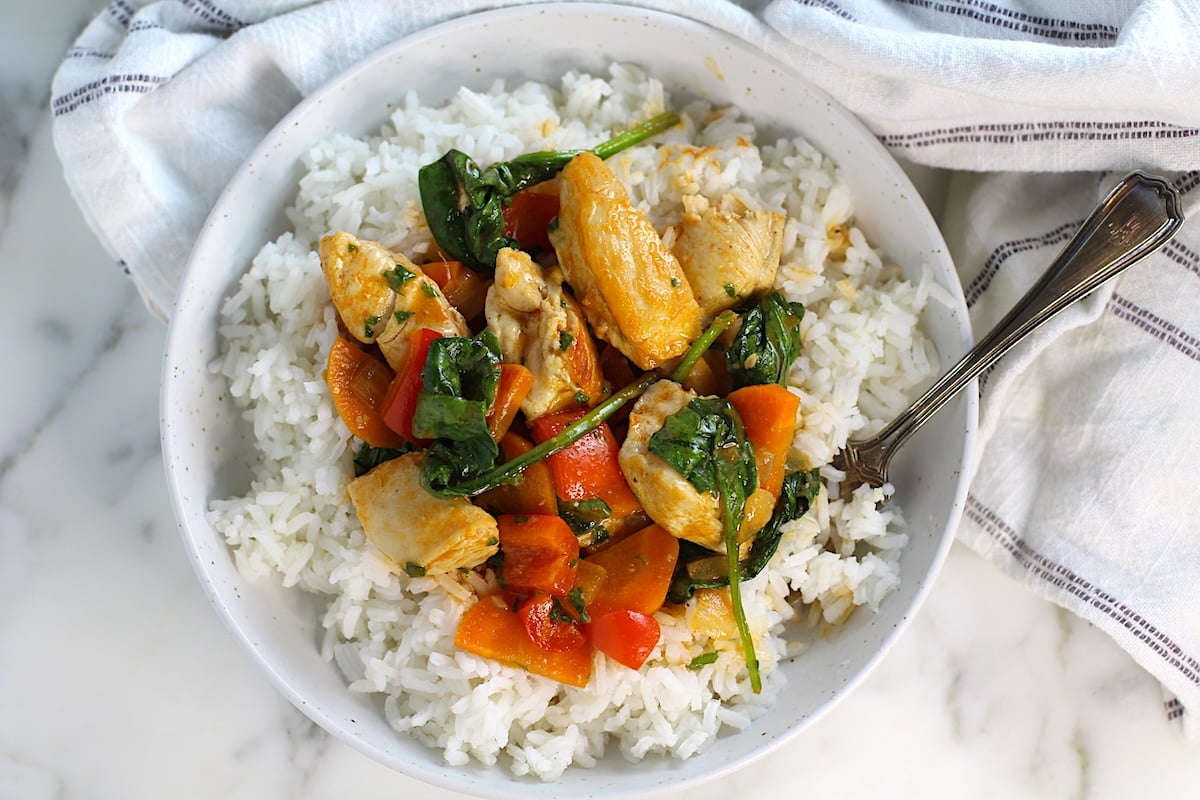
- FINISH AND SERVE. Stir in the baby spinach and cook for 1-2 minutes until wilted. Remove from the heat and squeeze in the fresh lime juice, then stir it in. Taste and adjust the salt or lime as needed. Garnish with fresh cilantro and serve over warm rice.


Comments
No Comments